Estates in Land
A real estate owner has the same rights as an owner of personal property: the right to possess it, to control it, to enjoy it, and to exclude it from others, and the right to dispose of it by selling it, gifting it, abandoning it, or bequeathing it — what lawyers call alienation. This is the classic idea of ownership. However, ownership or possession of real property is more complex than it is for personal property. Many of these real estate interests have arisen from their devisement in wills, where the testator wants several heirs to benefit from the realty. More complex forms of ownership, such as a life estate, can be applied to real estate, but not personal property because realty has 2 qualities that personal property does not:
- land is indestructible, and
- land is not consumed in its use.
Real estate interests vary both in types of interest and in their duration, and whether such interests are transferrable. A real estate interest can also depend on events or specific actions. Anyone purchasing real estate should know what kind of estate is being transferred, because it can severely limit the rights of the new property owner, and will also affect the value of the real estate.
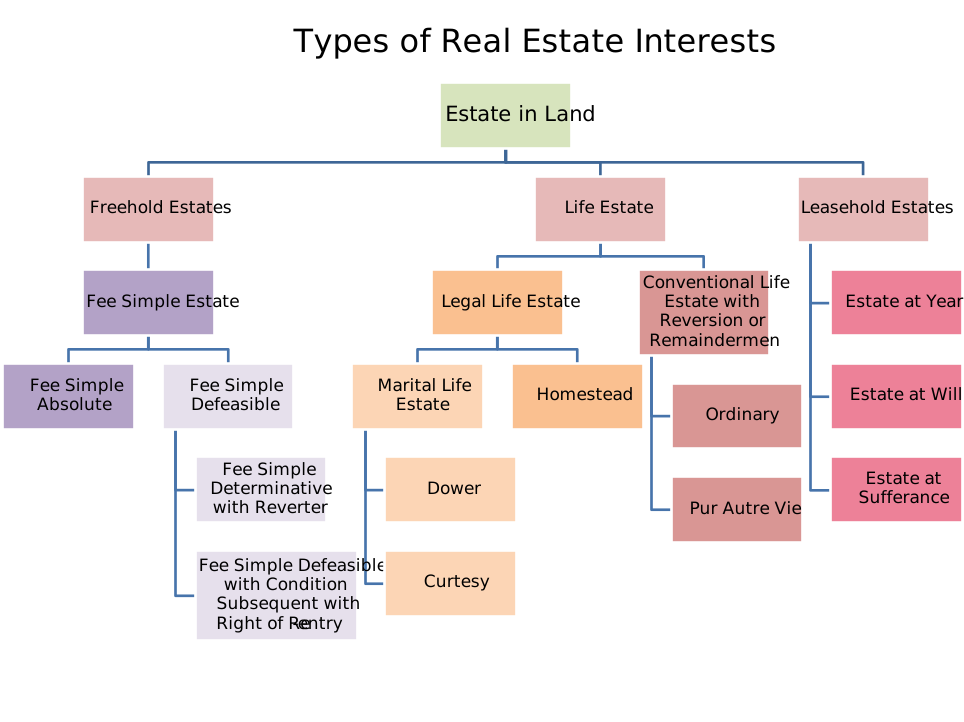
Many terms define the different interests in real property, and the most central concept is the estate in land, an interest in real property allowing possession either now or later for a specific or unlimited duration.
A freehold estate is one where the duration of ownership is indeterminate, which could be for a lifetime of an individual or an unlimited duration. For instance, the real estate that you buy is usually a freehold estate.
A leasehold estate lasts for a definite duration. A leaseholder has no power to alienate the property (transfer it to others); only her own interest can be transferred if it is allowed by the lease. Leasehold estates include estate for years, estate at will, and estate at sufferance. An estate for years lasts for a specified duration. Example: a tenant signing a 1 year lease has such an estate in years. An estate at will is one where a tenant can stay until either the tenant or the owner terminates the possession. An estate at sufferance exists when the tenant stays after the lease has expired, in which case, the landlord can expel the tenant at any time.
Fee Simple Estate
The fee simple estate (aka fee simple absolute, fee ownership, estate of inheritance) is absolute ownership of the property and entitles the owner to all rights of the property, which are only restricted by law or private restrictions, such as zone ordinances or covenants. At the death of the owner, the estate passes to the owner's heirs.
A fee simple defeasible estate is an estate in which the duration of ownership is subject to some condition, of which there are 2 types (defeasible means capable of being annulled or voided). Both the fee simple defeasible subject to a condition subsequent and the fee simple determinable require that some condition be satisfied or that an event happens or doesn't happen. They differ when the condition is no longer satisfied. With the fee simple defeasible, the original owner has the right of re-entry but must go to court to get it. With the fee simple determinable, the original owner has the possibility of reverter — the property will revert back to the owner automatically, without having to go to court or re-enter the land if the condition is not satisfied.
Life Estate
A life estate is a freehold estate where ownership is limited to the duration of some person's lifetime, either the person holding the life estate — the life tenant — or some other designated person. The owner has most of the rights of ownership, in that he can profit from it, possess it, or lease it, but those rights end when the life estate ends. The life tenant can lease, sell, or mortgage only his ownership interest in the property. The life tenant cannot alienate the property, nor can he allow the estate to waste — destroying real property or letting it deteriorate.
The conventional life estate ends when the life tenant dies. Ownership then either reverts back to the previous owner or passes to another designated person who holds a future interest in the property.
The duration of the estate pur autre vie ("for the life of another"€) depends on the life of a person other than the life tenant. The estate pur autre vie can be passed to heirs while the designated person is still alive. Often, this type of estate is created so that mentally or physically incapacitated people can be cared for by the life tenant.
When the life estate is created, the fee simple owner must designate who will become the new fee simple owner of the property. A life estate with a reversionary interest simply reverts back to the original fee simple owner when the life estate ends. Or the original owner could designate a remainderperson (aka remainderman), who will receive the title to the property when the life estate ends.
Legal Life Estate: Dower, Curtesy, and the Homestead Exemption
In some states, a legal life estate is created by law rather than by the owner of the land. Dower and curtesy are marital life estates in that the partial interest, usually 1/2 or 1/3 interest, which a spouse has in the real estate of the deceased spouse when the deceased spouse wills the property to someone else. Dower refers to the life estate created for a wife, while curtesy refers to the life estate for a husband. Most states have replaced the common law doctrines of dower and curtesy with the Uniform Probate Code (UPC), which gives the surviving spouse an elective interest in the deceased spouse's property.
A homestead is a legal life estate created for a family while the family lives in the house, which gives some protection against creditors. The homestead is also protected under bankruptcy. In some states, the only condition required to establish a homestead is for the head of household to own or lease a house used for the family's residence. In other states, the family must file a notice of the homestead. A family can have only 1 homestead at a time.
In a few states, the homestead cannot be sold, but in most states, only a portion of money from a forced sale is reserved for the family. However, the family's claim to the homestead share is subordinate to real estate taxes and to any claim secured by the property, such as mortgages or mechanics' liens; otherwise, the family's claim to the homestead exemption is superior to the claims of unsecured creditors. This may prevent the sale of the home if there would be no money left after paying off the secured debt and paying the family its homestead exemption because there would be nothing left to pay unsecured creditors.